
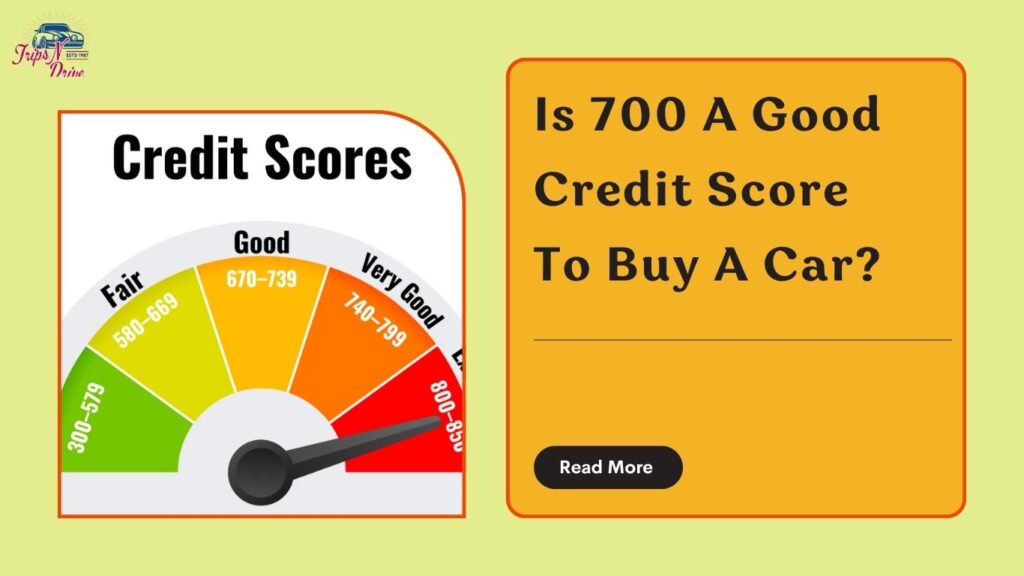
A car purchase involves more than just selecting a model you’re fond of and driving it off to the dealership. Your credit score has a significant impact on how you are able to make payments for it.
When buying a new or used car, the majority of purchasers have to take out a loan. One of the most crucial factors that lenders take into account when determining whether or not to lend you money, as well as the conditions and interest rate to give, is your credit score.
Regardless of credit score, almost anyone may be approved for a car loan and purchase a vehicle. However, the cost of buying a car will increase with your credit score.
Buyers with extremely poor credit scores face the risk of being preyed upon by predatory lenders, and they must decide if owning a car is worth the exorbitant cost of financing it. In this article, we will answer all of your queries regarding Is 700 a Good Credit Score to Buy a Car? So, let’s get started:
What Is A Good Credit Score For A Car Loan?
Knowing your credit score can give you the confidence you need to start the car-buying process on a solid financial basis. According to a study from the credit agency Experian for the second quarter of 2023, average credit ratings of those financing cars increased somewhat from a year ago.
The survey also revealed that although the average credit score for a brand-new vehicle loan was 741, however, it was 682 for used car loans.
A credit score of 661 or more effectively was required for almost 67% of car loans. Less than 2% of finance went to borrowers with scores below 500. In comparison, borrowers with scores between 501 and 600 accounted for around 13% of all borrowers. While a low credit score could increase your interest rate and make your payments greater, it won’t always prevent you from getting a vehicle loan.
Overall, making a higher down payment, looking around for loans, and presenting documentation of excellent payment history in the past will help you rebuild your credit score.
Understanding what you can anticipate on average can help you create a budget for the car because interest rates vary based on your credit score. You should be able to get a brand-new car loan with a yearly interest rate of roughly 6.44% or more or a used car loan with a rate of around 9.06% if your desired credit score is 661 or higher.
According to Experian’s research, rates for used cars may be as low as 9.06% for an individual with a credit rating in the low 700s, compared to 18.49% or more for an individual with a rating in the mid-500s.
What Is A FICO Auto Score?
A scoring system designed specifically for auto lenders called the FICO auto score is used to determine whether or not to accept a loan application for a car. It bases its risk evaluation on data gathered from the borrower’s credit report and applies predictive analytics.
Higher scores indicate a lower degree of risk. The score goes from 250 to 900. Higher score holders typically receive better loan conditions and cheaper Average car loan interest rates for a 730 credit score.
The intricacies of the FICO auto score remain confidential. Still, it differs from conventional scores in that it takes into account things like the time since your last credit inquiry, how recently you’ve applied for car loans and the kinds of cars you’ve been interested in.
What Credit Score Do Car Dealers Use?
The dealership will probably request a copy of your credit report when you buy a car and begin the financing procedure in order to determine your creditworthiness. To gain an accurate picture of your financial situation, it’s critical to know what kind of credit score they use.
When you apply for a vehicle loan or lease, car dealers often utilize the FICO auto score to determine your creditworthiness and risk tolerance. This score is based on information from your credit record.
Some dealerships may utilize their internal scoring system in addition to the FICO car score to evaluate prospective consumers. A number of variables may determine this score, and it is often kept a secret from the consumer.
To have the best chance of meeting all the requirements, we should constantly monitor the state of our credit score, try to improve it, and then protect it from harmful practices like theft of identification.

Can I Buy A Car With A 700 Credit Score?
With a 700 credit score car loan, you can purchase a car, but it will depend on the type of loan you select and the terms and conditions of the loan. In general, if your Car loan with a 700 credit score or above, you’ll be eligible for better interest rates than people with lower scores.
However, getting a car loan from a lender willing to provide you with the best terms and conditions can be significantly easier if you have a better credit score. The total amount of money you have to put down on the car and if you have to make a bigger down payment might also be influenced by your credit score.
A good score may also enable you to qualify for loans with longer terms and more lenient repayment choices, which may not be available to borrowers with lower scores.
Is A Down Payment For A Car Required If Your Credit Score Is 700?
The financier and the type of loan that you’re looking for truly determine your reply to this inquiry. Generally speaking, while financing a car you have purchased, you might not need to make a down payment if you have a credit score of 700 or higher.
Yet, it is still probable that a lender may demand a down payment in some circumstances, particularly if they believe you lack the resources or income to repay the loan. A down payment could be necessary for some car loans, such as those with long periods (more than five years) or subprime loans (for borrowers with bad credit).
In the end, it’s better to talk about the down payment required with your financial institution to see what they demand.
How To Get A 700 Credit Score To Buy A Car?
While there isn’t a precise technique for getting an exact score, however, you can try to fall within a certain range. There are broad concepts that can help you establish and maintain healthy credit. By following these instructions over time, you can boost your scores and, in the eyes of lenders.
Here are some practical suggestions to help you keep track of the crucial elements that might have an impact on your credit:
Keep Your Credit Utilization Rate Low
The portion of your available credit that is used is known as your credit usage rate. It’s generally advised to use no more than 30% of your available credit at any given moment or less than 30% of your credit limit. In general, you should spend less of your available credit while continuing to use the card often to keep it active.
You have choices to minimize your credit usage rate, such as paying off debt or raising your credit limits, if you analyze your credit reports and discover that it is more than 30%.
You’ll need to ask your present lenders for a limit increase in order to raise your credit limits; however, you should be aware that this might lead to lenders performing a hard inquiry on your credit when they make their choice.
Pay Timely
Your payment history—specifically, the frequency of your on-time payments—can have a big impact on your credit ratings. Depending on how long the payment has been overdue and how recently it was missed, a late payment may have a different impact on your ratings.
On the other hand, if you consistently make your payments on time, you can improve your credit, which can raise your chances of getting additional credit in the future should you need it.
Increase Your Credit Mix
In general, we do not advise taking out a potentially expensive loan solely to raise your credit ratings. However, it is true that over time, having a variety of credits might help in improving your ratings. Credit can be divided into two categories: revolving credit (such as credit cards) and installment credit (such as auto loans and mortgages).
However, there is a catch: requesting additional credit might result in a hard inquiry on your credit history, which can harm your ratings. Even while this effect is normally negligible, lenders can get concerned if there are too many hard queries in a short period of time. Before applying for a credit card or loan, it is crucial to get a broad idea of how probable it is that you would be accepted.
How Quickly Can A Car Loan Improve My Credit?
Your credit score will increase significantly if you take out a car loan. The size of the loan, how soon you repay it, and how much debt you already have are just a few of the variables that affect how much and how quickly things will improve.
Your credit score will be affected more by loans of greater amounts. Your credit score may rise by at least 70 points if you take out a loan for more than $10,000 and make on-time payments.
Other elements that may impact how much a vehicle loan can raise your credit score include – The amount of debt you currently have, How many open accounts you have?, Whether your credit report lists any delinquencies or bankruptcy, etc.
When you take out a car loan, your payment history has a major influence on how rapidly your credit score will rise. Your credit score might rise more quickly if you consistently make all of your payments on time than if you skip or delay payments.
What If You Don’t Qualify For An Auto Loan?
It might be upsetting and disappointing if you apply for a car loan and your application is denied. It may make it impossible for you to purchase the car you desire or perhaps to do so at all.
However, in the long term, having a loan denied might be advantageous. A denied application indicates that the lender does not believe you will be able to make payments on time or repay the loan.
By keeping you from taking on more debt than you can handle, you may avoid having your credit score fall even more, losing your car to repossession, and even declaring bankruptcy.
Auto lenders are required to give you a copy of the credit report that was used to make the decision and the explanation for why you weren’t approved when you applied for a loan. After considering those factors, you may take steps to strengthen your credit’s areas of weakness or search for a less expensive car that you can afford to finance.
Final Thoughts
A strong credit score might open up greater opportunities for credit than lower scores. Although there are many aspects that lenders take into account when evaluating a credit or loan application, strong credit scores often correspond with increased acceptance probability.
You may also be eligible for loans with more favorable conditions and cheaper Interest rates on auto loans with a 700 credit score. I hope we have cleared all your queries regarding Is 700 a Good Credit Score to Buy a Car?
Still, if you have any doubts or queries, do comment and share this article with your friends and families.
Frequently Asked Questions
What interest rate can I get with a 700 credit score for a car?
With a credit score of 700, you could get auto loans with interest rates ranging from 3% to 6% for brand-new vehicles and from 5% to 9% for used vehicles. These, however, are based on your spending patterns, level of income, and debt-to-income ratio.
How much of an auto loan can I get with a 700 credit score?
You may often find car loans up to $100,000. With a 700 credit score, you could be approved for a $100,000 car loan, but it’s not a given. Some lenders may set a maximum loan amount if you have a high debt-to-income ratio or a lot of debt.
Is an 800 credit score easy?
It’s challenging but ‘absolutely possible,’ according to experts, to raise your credit score above 800. Here’s a guide on getting it done. A higher credit score opens the door to reduced rates, which might result in interest savings of thousands of dollars. Anything beyond 800 is considered to be the top tier and can open up even better terms.