
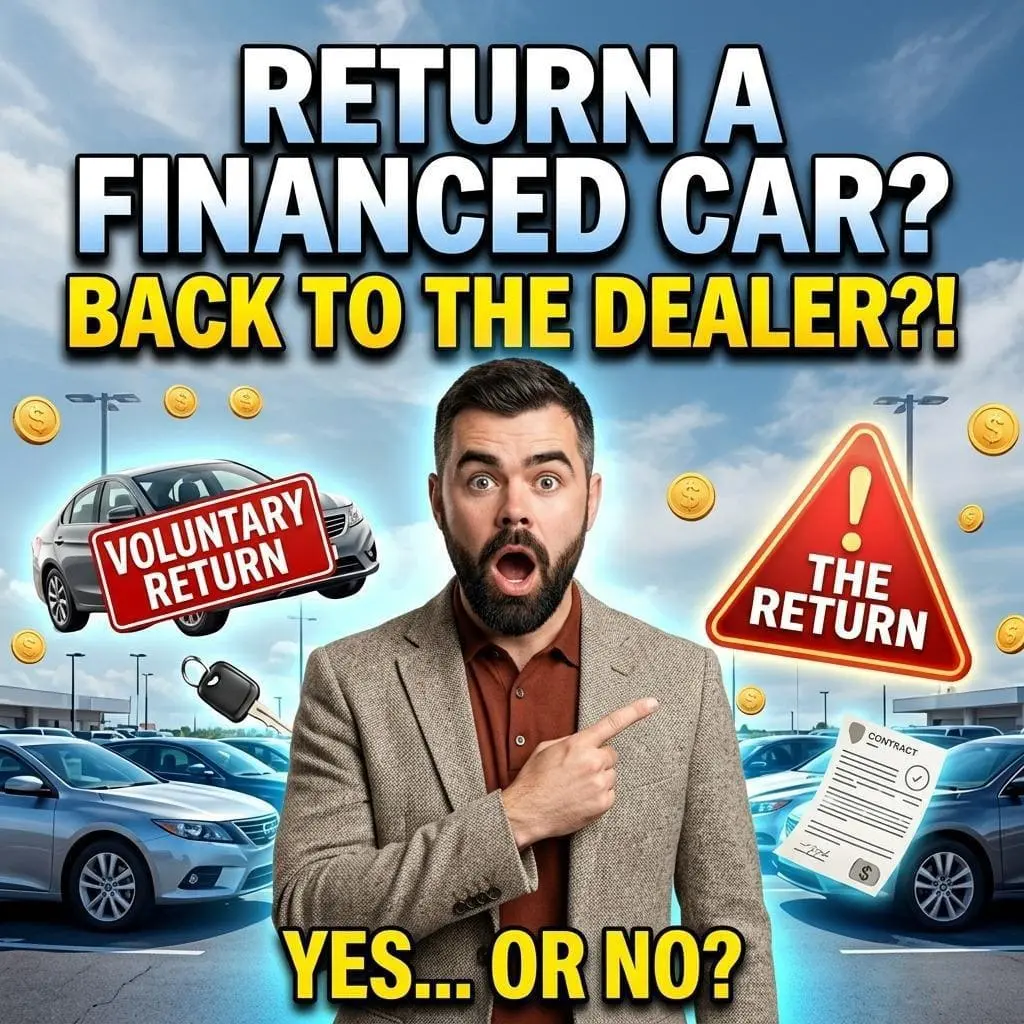
Life is Full of uncertainties. Sometimes, you like a car and finance it, and after a few days, you want to return it to the dealer you bought it from. However, he is not legally bound to take back the car and return the whole amount you have paid while financing the car.
There are cancellation fees, penalties, and other charges you have to pay if you want to return the car to a dealer. There is also a risk in returning your financed car. It will negatively affect your credit score.
All those conditions are stressful. However, you can choose other alternatives to avoid penalties, fees, etc. So, what do you want to do in this situation? Can you return a car to the dealership? Keep reading this blog. It will help you in learning the possibilities of returning your cars to the dealer.
Can You Return A Car To The Dealership?
You can think about the question: Can you return the financed car if it doesn’t suit your needs or if the payments are too expensive? Before making any plans to return your car, you should be informed of the following laws and regulations.
Lemon Laws
State regulations known as “lemon laws” are intended to protect consumers who buy or lease a car with faults that disrupt its performance, significance, or protection. You could be eligible for a refund or a car that is equivalent in worth to the one you bought if the dealer attempts to fix a “lemon” after you buy it but is ineffective.
It’s crucial to know the laws in your jurisdiction because the security measures provided by lemon laws vary from state to state. Although lemon laws usually only apply to new cars, used car purchases are also covered in some places.
Dealer Return Policies
Some auto dealers have policies that, under certain circumstances, permit customers to return cars they’ve financed. If you comply with the policy’s guidelines, you should generally be allowed to return a car if you purchase it from a dealer who explicitly will enable returns.
Policies may limit this to a specific time frame (For example, Returning a financed within 30 days) with specific mileage restrictions. If the dealer does not have a return policy, and one is not mandated by law, it is up to it to decide whether it will approve a return on a case-by-case basis. Before you buy, it’s a good idea to review the policy.
Alternatives To Returning A Financed Car
Here are some alternatives that you might think about if returning your car is not possible :-
Sell It To The Third Party
You can pay off the vehicle’s loan relatively simply if you sell the car to a private buyer. Still, if not, you’ll need to pay the remaining amount yourself to get rid of the security deposit from your lender. You might earn less money if you attempt to sell it back to the dealership than through a private transaction.
Usually, trade-in values are lower than the car’s actual cash value (ACV). Your car can be worth more than usual at the moment due to the inventory shortages that are happening. Before accepting the initial offer, seek many quotations from dealers and internet appraisal services.
Refinance Your Loan
If you are contemplating How to return a car you can’t afford, consider refinancing the loan first. You can lessen your monthly payment with a lower interest rate or longer term.
Voluntarily Repossessed
Reach out to the lender to seek a modified payment schedule or possibilities for a voluntary repossession if you fail to sell your car or restructure your loan and cannot make your payments. If you consent to have the car voluntarily repossessed, you might not be liable for the repossession costs, which you’d probably have to pay if the lender took the car back.
However, the difference between the price the lender can get for the car and what you owe on the loan is still your responsibility to pay. Even worse, your lender can continue to disclose the repossession to the credit reporting agencies, which might hurt your credit scores and reports for up to seven years.
Keep in mind that you can end up paying more in interest throughout the loan if you decide to extend the duration of the loan.
What Are The Penalties For Returning A Financed Car?
Your loan agreement should contain most penalties for returning your financed car. The most frequent charge related to terminating a finance arrangement of your car before the term is over is financing cancellation fees. The whole cost of cancellation should be made clear in your financing agreement:
The following are the implications for returning a financed car that you are still making payments on :-
- Fees for canceling loans ($200 to $400 in most circumstances)
- Due to lenders’ dwindled trust in your capacity to make timely loan payments, your credit score will decline.
- After returning your financed vehicle to the dealership, you can still owe money on the loan, depending on its real return value.
How Can You Return A Financed Car Without Penalty?
You can return a financed car without Penalty, but you can’t do it without incurring some Penalty. Avoiding a car loan without losing a significant sum of money or hurting your credit by consulting with the dealership and carefully evaluating all available options is possible.
Let’s look at some of the most prevalent factors why individuals could return a car they haven’t completely paid for before we discuss ways to lessen the scope of penalties for returning a financed vehicle :-
- Their financial circumstances are changing (due to a job loss, rising vehicle insurance prices, etc.), making loan payments expensive.
- A relocation to a new city where the driver opts not to carry an automobile or their present vehicle.
- Before paying off their loan, an individual may discover various hidden problems with a car that first appeared to be in good condition.
- Individuals have determined that there are better choices than the car they are financing.
You might be considering how you can return a car without damaging your credit. You won’t be able to return a financed automobile without incurring some Penalty unless there are any unique conditions in your financing agreement.
However, there may be some additional choices considering considering considering depending on why you want to return your financed automobile. For instance, you can ask your dealership for permission to skip a few payments while you look for work if you’re looking for a new job. These late payments may subsequently be applied to the remaining balance of your loan.
Similarly, if your automobile has multiple issues, you can exchange it at the dealership for a different car rather than return it. Trading in your financed car could provide you with a cheaper car and a less complicated debt to repay, provided its value has mostly stayed the same since you began using it.
You can also locate someone willing to take over your loan payment if you’re relocating to an area where you won’t need a car or if you’ve decided the car you’re financing could be better.
This is frequently advantageous since you avoid making loan payments, and the individual you contact to take over your loan benefits from a terrific price on a car. Ask your car dealer about their loan transfer procedures.
Will Returning A Financed Car Affect Your Credit?
Returning a financed car will hurt your credit score, especially if you willingly have your vehicle repossessed. Credit Karma claims that voluntary repossession shows up on your credit record and might make getting future loans challenging.
The explanation for this is simple: After you show that you cannot shell out your loan or otherwise break the terms of your contract, lenders lose faith in your ability to fulfill your regular payments.
Although you may have had excellent reasons for returning the financed car, the dealers are more focused on the ability to make payments. Consider refinancing your car loan with a low-rate loan that you can effortlessly repay over many years to minimize the negative impact on your credit score.
Final Thoughts
A car can’t be returned the same way an apparel product or pair of jeans can. Generally speaking, you can’t just return it to the dealership if you change your mind about a car after driving it off the lot. There are certain exceptions, though. There are also things you may do if you want to return a car you no longer want.
I hope this article has answered the question of How to return the financed car to the dealership. If you still want to know more, refer to our FAQs section or comment below and share the post with your friends!
Frequently Asked Questions
Can you return a financed car to the dealer the next day?
There are some approaches to returning the car to the dealership. However, the unfortunate fact is that most car dealerships won’t allow you to produce a car you’ve financed. When you finance a car sight-unseen without a test drive, some dealers may give a seven-day assurance; however, most don’t.
Can I sell my financed car back to the dealership?
Yes. You can sell the car even if you owe more than it is worth. Still, you will need to provide the dealership with a check for the difference between the car’s value and the remaining balance of your loan.
The dealer will send you a cheque for the difference between the value of the car and the outstanding balance of your loan if you find that you owe less on the car than it is worth.
Can I return a car and get my down payment back?
The dealership isn’t obligated by law to reimburse your down money if you, the buyer, decide not to proceed with the purchase after placing an order for a car. However, there may be situations where you have a right to a refund under the law.
Can a financed car be exchanged?
You cannot sell the vehicle until the remaining loan balance is paid in full. A no objection certificate (NOC) from the bank is required. You may delete the hypothecation from the registration certificate (RC) with this NOC.
What is hypothecation in car loans?
When you apply for a loan, you can pledge an asset to the bank (in this example, a car). This is known as hypothecation. Until you pay off the loan, the bank retains the automobile as security or collateral. Although you own the car, your bank officially “holds” it for the duration of the loan.