When a rental goes on the fritz in the middle of a highway, it can be stressful when you’re probably so far from help. However, when managed in a fume-free manner and proper steps taken it is more often a manageable situation than a disaster. There’s only one easy thing to remember: to follow safety guidelines, make contact with the rental company, and keep everything documented.
Step By Step Guide For A Rental Car Breaks Down On Highway
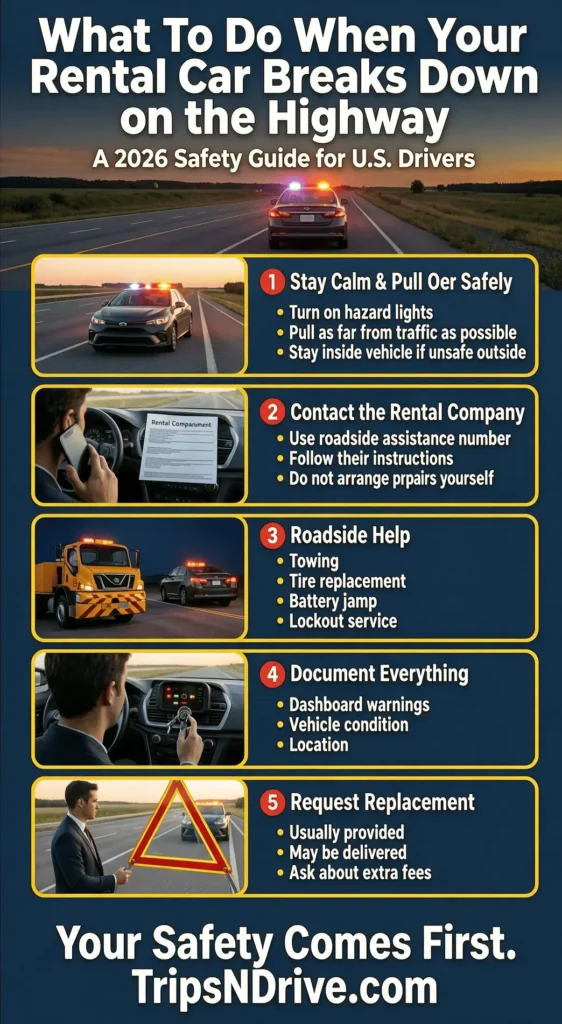
Step 1 – Priortize Safety First
When you realize something is missing, such as seeing a warning light, hearing some weird noises or power loss, that’s when you need to find a safe place.
Slow down gently. Never panic and press the brake immediately or take sharp turns. Turn on the indicator and slowly turn the car to the edge of the road. Note: If possible park on the right shoulder, if left is safer, do so instead. Immediately, put on your flashing lights when you stop to make others aware of your condition.
Park well away from traffic (except moving traffic). If you do have triangles behind the car- only set them up if it’s safe to get out of the car. Never take chances with fuel leakage and/or smoke.
In most instances, it is best to remain in a vehicle having an on board belt. Do not venture onto the street unless there is an absolute essential reason for doing so, and from the side opposite to the traffic flow.
Also, observe your location to the best of your ability. Try to locate an exit from the highway, signs or mile markers. This will be useful when you’re seeking help.
If you’re in a situation that is dangerous, maybe stuck in the middle of the road, low-visibility then call emergency service number 1 the police first! Summoning up for your safety is a priority.
Step 2 – Contact The Rental Car Company Immediately
When you come to a safe place then stop and call the rental company for roadside assistance. This is very important. Avoid calling random tow services and attempting to fix the car.
Each rental agency offers a 24 hour contact phone number; typically it will be displayed in your rental contract, or included in their rental application. Be prepared and ready to announce yourself when you call
The rental agreement number is that number which is assigned to your rental agreement.
- Your exact location
- Which issue you identified
- The condition of the car
They can either dispatch a repairman, offer the towing or supply a substitute vehicle based on the scenario.
You shouldn’t make decisions about any action until they have told you to do so. Doing repairs without a professional could mean that you could be liable for repairs later.
Step 3 – Document The Breakdown And Vehicle Condition
As waiting for assistance, jot down what is happening. This is a thing many people tend to forget, but could save you money and hassle later on.
Make pictures or videos of :-
- Dashboard warning lights
- Any damage, smoke or leaks that are visible
- Its location on the road.
- Signs and/or markers close by to indicate location.
Record the time, date and place also. Make track of any type of calls made and individuals spoken to.
Keep all receipts if you spend money, such as on hooking up a cab, application for food and a hotel. You might be able to get reimbursed later for these.
Read Also: Can I Rent a Car for Someone Else? Everything You Need to Know!
What To Expect After Reporting the Breakdown?
Post your call and you’ll receive direction from the rental company. They may address the issue that occurs if the problem is not too large. If this is more serious, they will bring it to the tow truck and will secure a better replacement.
In most situations you will only have to be lent another car, for you to continue with your journey.
Who Pays For The Rental Car Breakdown?
This will of course depend on the point of failure.
When a mechanical problem occurs such as when the engine fails, battery goes bad, or there’s a mechanical problem with the part the rental company will cover the topic. Towing and repairs will all be covered. They are expected to have a Work Car available onsite.
However, if the accident occurred because someone was operating the bus to fail, there is the possibility that you could be charged. Common examples include :-
- Running out of fuel
- Waste items such as using the wrong fuel for heating or cooking.
- Ignoring warning signs
- Keeping lights on & draining battery
- Circumstances of driving in restricted areas.
If they do, you might be in for some more losses, including towing, repair costs and even forfeiture of use.
Should the breakdown have been brought on by an incident, then any insurance or damage waiver policies will apply.
What Is Your Eligibility For Compensation?
Usually rental firms don’t automatically reimburse you for the inconveniences. The main responsibility of theirs is to repair the problem or replace the car.
But you may be able to get back some costs, particularly if it isn’t your problem.
You may qualify for up to a 100% reimbursement of your medical costs :-
- State rates of travel (such as taxi or rideshare)
- Overnight with a hotel fee, if forced to spend a night in the car.
- With long delays, food costs could be an issue.
You will need the appropriate documentation with your claim, including receipts, photos and communication records to make a claim.
Some credit cards will also provide benefits when renting a car, such as paying for any excess charges incurred. Prior to travel it is always a best practice to check this.
Helpful Tips And Common Mistakes To Avoid
Things can cost a lot if several incorrect choices are made in some of the decisions.
Do not attempt repairs, or go to a local mechanic, without authorization. This may terminate your policy.
Always make sure that the rental company knows when the car is being driven away. This may lead to additional fees being charged.
Also, if there are serious issues, such as smoke or overheating, don’t drive any further. It can result in more serious damage with liability potentially being on you.
Final Thoughts
A highway rental car breakdown event is seldom a positive experience, however it is not the end of the trip. By remaining calm and following the proper steps this situation is easily dealt with.
Normally, the business will solve the concern and can also have you on the go rapidly. But be sure you know what you are covered for and you have all documents handy!
In the end, it is a matter of safety and allowing the experts to do what they want to be doing: their jobs.